Training Philosophy & Other Odds & Ends
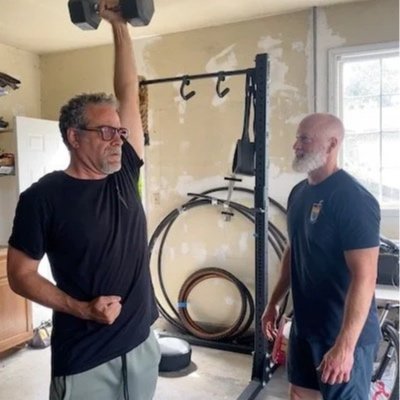
While there are many ways to skin a cat when it comes health & fitness, over my 20+ years of coaching, I’ve found that only a handful of things will lead you to the promised land. Let’s discuss them.
Movement Matters
The movements you practice (exercise selection) are critical. I’m not just talking about technique here. Practicing with proper technique is important, of course, and something I’ve always emphasized. But just as important, you need to be performing movements in your training session that give you a big ROI—whether we’re talking about getting stronger, enhancing range of motion or mobility, gaining muscle, improving hormonal status, or various other positive adaptations (insulin sensitivity, anyone?).
Most often, we’re talking about compound movements (movements that involve multiple joints and muscle groups). For loaded movements (barbell primarily, but also dumbbell or kettlebell) think squat, deadlift, press, and the like. Or if you want to pick from bodyweight movements, we could go with classics like lunges, push-ups, dips, and pull-ups. Note that these are just examples. The main point here is that these are movements that involve multiple joints and generally use a long range of motion. That’s not to say single-joint movements don’t have a place in training programs (hello bicep curls!), but they shouldn’t form the foundation of training.
In short, you’re only as good as your movement quality.
Consistency Trumps Just About Everything Else
This is nothing new under the sun. If you show up and put in the work, good things will happen. To be clear, though, you need a good program in place. You need to pick your spots to turn up the intensity, but you can’t ride the intensity train too often or you’ll derail (stagnation, or even worse, regression). You also can’t coast through your training sessions (not talking about deloads here). Figuring out the right balance is where a professional coach comes in.
Get Strong
If you pay attention to the most current research, or—gasp!—social media, you might be aware that strength training is having its moment—a renaissance of sorts. And this is a great thing! Strength training isn’t just about improving your ability to produce force, or about gaining muscle mass or leaning out. More and more research is pointing to various health benefits of strength training like the ability to process blood sugar more efficiently (insulin sensitivity), or like muscle’s ability to serve as a hedge of sorts against dementia and other age-related declines in cognition. Rhonda Patrick, a Ph.D. in Biomedical Science and a prominent health educator on topics like aging, nutrition, and disease prevention, is on record with the following quote: “After age 65, low muscle mass can literally be a death sentence.”(1)
Let that sink in for a moment.
Just to address a point someone may bring up: Yes, you can get stronger without gaining significant muscle mass. And for many people, this is a concern. They don’t want to get “bulky” (it’s not just women, by the way). But wouldn’t it make sense, given the points above, to try to at least gain a little bit of muscle? If you offset 2-5 pounds of muscle gain with at least that much fat loss, you will actually shrink. I’ve seen it happen so many times I’ve lost count.
Notes:
Patrick, Rhonda (2025), How to Train According to the Experts, Page 3, https://howtotrainguide.com
Get Your Cardio Dialed In
Yes, cardio is important, too. You want to have a strong heart and lungs. Sure, you could do a VO2 Max test to find out where you are. But you’re probably just as well off assessing “real world cardio.” Do you get winded going up a few flights of stairs? Does chasing your kids or grandkids around get you quickly out of breath? Does playing in a weekend pick-up game have you doubled over after a few minutes of running up and down the court? You don’t want to be there. You don’t need to have the cardio capacity of a marathon runner (or an MMA fighter), but I’m guessing you want to be a full participant in the activities of your life that matter to you, no?
And Last But Not Least, Have Fun!
If you do this thing right, it’s gonna be something you do for the rest of your life, so you might as well have fun doing it. Training sessions shouldn’t be dull affairs where you robotically check off items on the health and fitness list. Have fun with rotating through different movements to keep everything fresh, and most importantly, have fun making progress.
